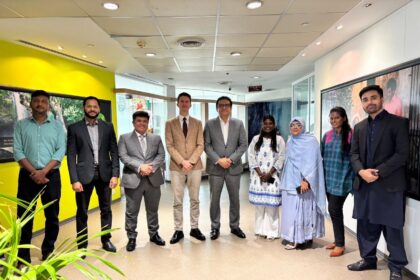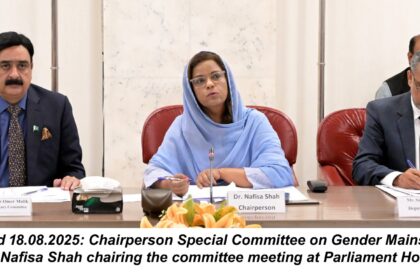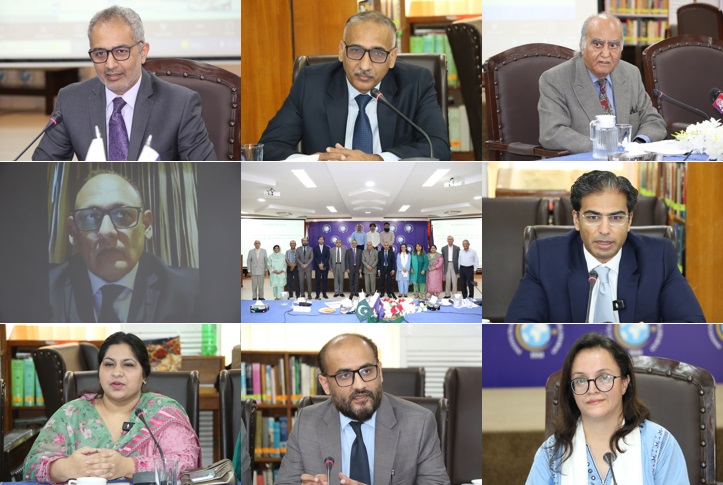
The Institute of Strategic Studies Islamabad in collaboration with the Policy Research Institute of Market Economy convened a roundtable on April 28, 2026 to assess the economic fallout and opportunities arising from the Middle East crisis for Pakistan. Senior policymakers, economists and sector experts examined how the Middle East crisis could reshape energy security, trade flows, remittances and wider macroeconomic stability in Pakistan.
Dr Neelum Nigar, Director of the Centre for Strategic Perspectives at ISSI, said Pakistan faces both heightened risks and emergent opportunities and must strengthen its capacity to adapt to an increasingly complex global economic environment. Her remarks set a pragmatic tone that emphasized preparedness and policy agility in the face of external shocks.
In welcome remarks, Ambassador Khalid Mahmood, Chairman of ISSI’s Board of Governors, underlined the immediate implications of the Middle East crisis for Pakistan’s energy imports, migrant remittances and trade ties with Gulf partners. Dr Ali Salman, CEO of PRIME, highlighted the growing convergence of geopolitics and economics and urged policymakers to pursue geoeconomic strategies that extract a peace dividend through proactive economic and diplomatic engagement.
Speakers outlined concrete areas for policy attention. Dr Hassan Dawood Butt observed that Pakistan is increasingly seen as a potential regional intermediary but warned that institutional reform is essential for the country to capitalise on that role. Dr Nasir Iqbal flagged macroeconomic vulnerabilities including possible oil price shocks, inflationary pressures, falling remittances and export dislocations, while recognising potential gains from reconstruction demand in Gulf markets.
Energy sector shortcomings were underscored by Dr Khaled Waleed, who called for grid modernisation, an accelerated rollout of renewables and enhanced energy storage to reduce vulnerability to external supply disruptions. Dr Uzma Zia urged a strategic shift away from remittance dependence toward a diversified model anchored in trade, logistics and regional connectivity, stressing the need to modernise ports and develop integrated economic corridors. Dr Vaqar Ahmed pointed to governance and coordination gaps, advocating stronger institutional frameworks, better data sharing, strategic reserves and proactive economic diplomacy.
Participants agreed that a governance and policy reset is needed to turn external shocks tied to the Middle East crisis into structured economic opportunities. Re-engagement with multilateral frameworks, including the IMF, was seen as necessary to secure balanced programmes that support long-term structural reforms and growth. Experts also cautioned that Pakistan’s external account remains fragile and remittances could be volatile amid regional instability.
At the same time, speakers identified a narrow window for strategic repositioning. Shifting regional connectivity patterns and emerging transit routes through Iran and adjacent corridors present trade and transshipment prospects if the private sector and public authorities invest in port and logistics readiness, particularly at Karachi and Gwadar. The consensus was clear that timely and coordinated policy action, focused on energy resilience, infrastructure readiness and institutional reform, is required for Pakistan to mitigate risks and seize economic opportunities presented by the Middle East crisis.