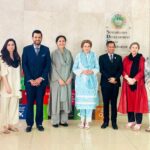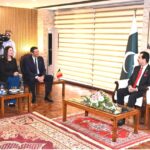




A high-level committee chaired by Deputy Prime Minister Mohammad Ishaq Dar met in Islamabad to advance reforms aimed at strengthening the regulatory framework for medical and dental education across Pakistan. The Sub-Committee on Accreditation of Medical and Dental Colleges and Postgraduate Qualifications reviewed measures to improve transparency and consistency in accreditation and inspections, reaffirming the government’s commitment to robust medical accreditation.
The sub-committee discussed standardising accreditation mechanisms for undergraduate and postgraduate institutions and streamlining recognition and inspection procedures to align with international norms. Members praised ongoing efforts to ensure merit-based inspections and stressed a policy of zero tolerance for negligence or irregularity in the accreditation process to protect the quality and credibility of medical education.
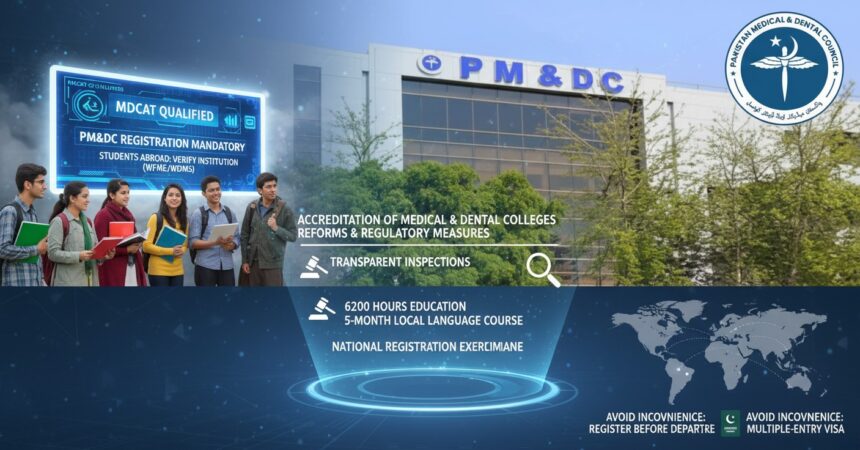
The meeting set clear requirements for students planning to study medicine or dentistry abroad. All prospective foreign students must first qualify the MDCAT and obtain registration with the Pakistan Medical and Dental Council (PMDC) before departing, and must confirm that the chosen foreign institution appears on the PMDC list of recognised schools. The committee further specified that foreign medical programmes should be WFME accredited or listed in the World Directory of Medical Schools, and that the medical qualification must comprise at least 6,200 hours of instruction with a minimum 80% attendance over a period of five years.
For study in non-English medium countries, students were advised to complete at least five months of local language preparation before starting classes to ensure effective communication and academic performance. Upon return, graduates will need to pass the National Registration Examination administered by PMDC to obtain registration and licensure in Pakistan.
The committee also instructed students to provide complete residence details and contact numbers for their country of study prior to departure and to secure a multiple-entry visa valid for the duration of their programme. Officials said these steps are intended to safeguard the academic and professional futures of Pakistani medical students and to ensure that graduates meet required national and international standards in medical education.