



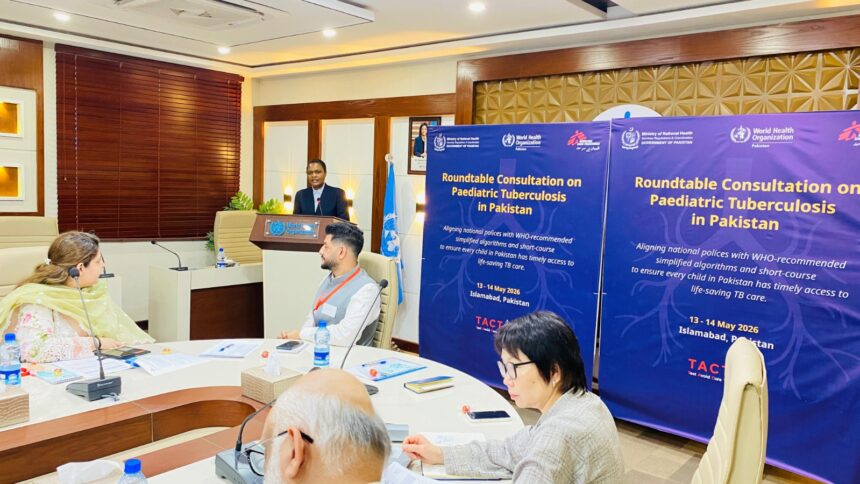
A two-day consultation held at the WHO Country Office in Islamabad brought together Pakistan’s Common Management Unit for AIDS, Tuberculosis and Malaria, the World Health Organization and Médecins Sans Frontières to strengthen the national response to childhood tuberculosis. The meeting focused on adapting Pakistan’s policies to the latest WHO guidance to better protect an estimated 93,600 children affected by the disease.
Under the leadership of the Ministry of National Health Services, Regulations and Coordination, the consultation sought to align national practice with WHO recommendations while drawing on lessons from MSF’s TACTiC initiative. The event, organised in collaboration with the Pakistan Paediatric Association, emphasised practical steps to embed childhood tuberculosis prevention and care within existing child health and primary care platforms.
WHO-recommended measures discussed include a shortened 4-month TB treatment regimen, expanded TB preventive treatment for contacts, and new all-oral 6–9 month regimens for drug-resistant TB. Participants also endorsed a family-centred, decentralised model of care and updated treatment-decision algorithms to enable earlier clinical action where laboratory confirmation is not possible.
Children represent at least 14% of Pakistan’s 669,000 registered TB cases. The country carries 73% of the tuberculosis burden in the Eastern Mediterranean Region and ranks fifth globally for TB cases. Tuberculosis accounts for roughly 51,000 deaths each year in Pakistan, with an estimated 1,800 new cases reported daily and about 140 deaths per day. Globally, the WHO Global TB Report 2025 estimates some 1.2 million children developed TB in 2024, underscoring the urgency of closing detection and treatment gaps.
Dr Faisal Siraj, TB Programme Manager at the CMU, said Pakistan has prioritised paediatric tuberculosis and is advancing integrated, child-focused interventions such as standardised clinical diagnosis, systematic household contact investigation and scale-up of preventive therapy. Strengthened engagement with private providers and improved surveillance are being institutionalised through the forthcoming National Strategic Plan to ensure sustained reductions in disease burden among children.
MSF’s national implementer for the TACTiC initiative highlighted the use of new diagnostic algorithms to support clinicians in initiating treatment early even when laboratory tests are unavailable or inconclusive. WHO representatives underlined that protecting children from tuberculosis is both a medical responsibility and a moral imperative, and reaffirmed support for Pakistan to accelerate evidence-based actions that reach every child at risk.
Moving forward, stakeholders agreed to integrate the latest WHO science-based guidelines into national policy, scale up decentralised and family-centred services, and prioritise early diagnosis and preventive care so that more children affected by childhood tuberculosis are identified, treated and protected.